


lakiwin | Exploring the World of Simulation Games with a Twist: Understanding 'lakiwin' as a Game-Changing Keyword
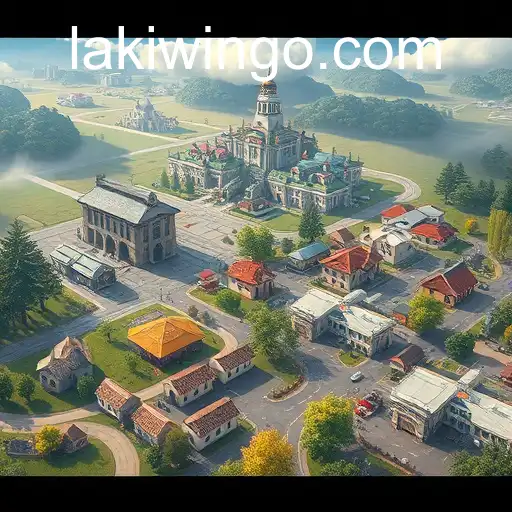
Simulation games have long been a beloved category in the gaming industry, offering players the chance to dive into detailed and realistic environments that mimic real-world activities. These games are designed to simulate aspects of reality, providing users with experiences that range from managing a city or operating a farm to more niche scenarios like flying a plane or running a hospital. In this expansive world, the keyword 'lakiwin' has emerged as a significant term that transcends traditional boundaries and offers fresh insights into the gaming experience.
'Lakiwin' has evolved beyond being just a unique identifier. It represents a conceptual shift in how simulation game creators and players interact with the genre. One of the core aspects of simulation games is their ability to let players experiment with various scenarios and outcomes without real-world consequences. The introduction of 'lakiwin' highlights the growing trend of integrating randomness and chance into these controlled simulations, thus providing an element of unpredictability that more closely resembles real-life scenarios.
The role of 'lakiwin' in simulation games can also be seen as a bridge between traditional gaming paradigms and emerging trends in interactive storytelling. By incorporating elements of chance and randomness, developers have the opportunity to craft narratives that are not only user-driven but also influenced by the unpredictability of this keyword. This approach not only enhances replayability but also ensures that each session feels unique, providing fresh challenges and novel experiences every time.
Moreover, 'lakiwin' as a keyword signifies the innovation and creativity that drive the simulation game genre forward. The appeal lies in its ability to create dynamic and evolving game worlds where players must adapt and strategize based on elements that are not entirely within their control. This unpredictability makes the simulation genre even more engaging, as players cannot always rely on predefined strategies or outcomes.
The impact of 'lakiwin' is also reflected in the online gaming community, where terms like these can lead to cult followings and niche communities. Enthusiasts of simulation games often create forums, discussions, and even modifications around their favorite games, using keywords like 'lakiwin' to share tips, strategies, and experiences. This community-driven approach adds another layer to the gaming experience, fostering dialogue and collaboration among players worldwide.
In conclusion, simulation games continue to captivate players by offering immersive experiences that mirror reality while adding layers of complexity and unpredictability. With 'lakiwin,' players are introduced to a new frontier in gaming where chance and choice intertwine, challenging them to think differently and engage more deeply with their virtual environments. As game developers continue to explore and expand upon this concept, the future of simulation games promises to be even more vibrant and diverse, ensuring that this genre remains at the forefront of innovative gameplay.
